
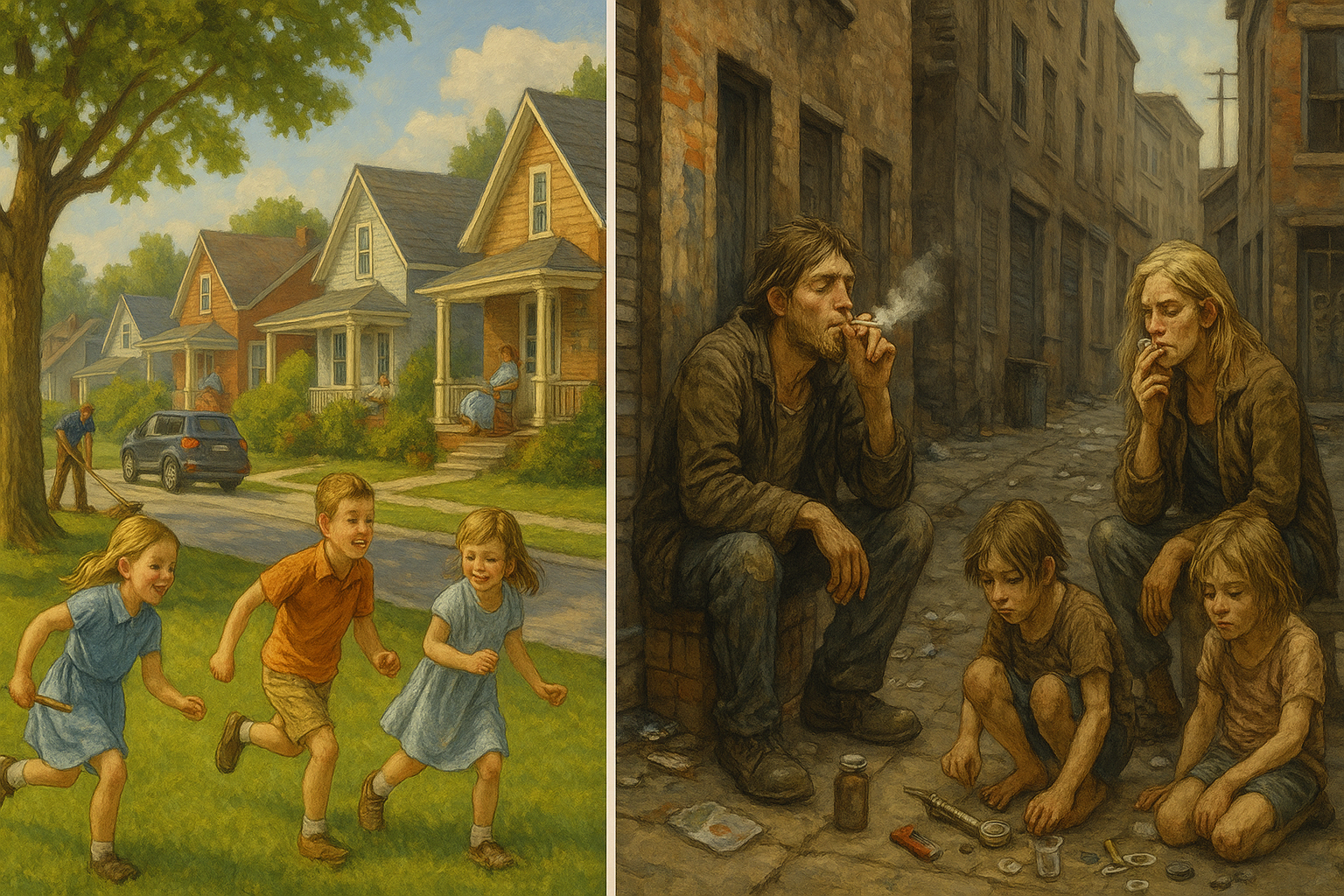
Cannabis legalization has moved from the political margins to the center of American public debate in little more than two decades.
What was once treated almost exclusively as a criminal justice matter is now discussed in terms of personal liberty, public health, state revenue, social equity, and federalism.
Today, marijuana policy affects tens of millions of Americans directly and indirectly, making it a serious voting issue rather than a cultural curiosity.
At the most basic level, cannabis legalization refers to the removal of criminal penalties for the possession, use, production, or sale of marijuana, either for medical purposes, recreational purposes, or both.
In the United States, this process has unfolded unevenly. Some states maintain strict prohibitions, others allow limited medical use, and many have legalized recreational use in direct tension with federal law, which still classifies marijuana as a Schedule I controlled substance.
This patchwork alone makes the issue important. Americans are subject to very different legal, economic, and social consequences depending on where they live, even though they share the same federal government.
That reality raises questions about fairness, constitutional authority, public safety, and moral responsibility.
Why Cannabis Legalization Matters to Americans
Cannabis legalization matters because it touches everyday life in concrete ways. Tens of millions of Americans report having used marijuana, and regular use has increased steadily as legal barriers have fallen.
In states where recreational marijuana is legal, dispensaries have become normalized features of commercial districts, changing public expectations and cultural norms.
Polling consistently shows majority support for “legalization” in the abstract, but support weakens when respondents are asked about high-potency products, public consumption, impaired driving, or youth exposure.
This distinction matters. It suggests that many Americans are not embracing a permissive drug culture wholesale, but are instead responding to fatigue with criminal enforcement and sympathy for limited reform.
The issue also matters because legalization is functionally irreversible. Once commercial markets are established and tax revenue becomes embedded in state budgets, repeal becomes politically and practically unlikely, even if downstream harms emerge.
Economic Impact on the Common Citizen
Supporters of legalization frequently point to economic benefits.
Legal cannabis is now a multibillion-dollar industry. States impose excise taxes, sales taxes, and licensing fees, often advertising that the proceeds will fund schools, infrastructure, or public health initiatives.
In practice, revenue projections are often overstated. Regulatory systems are expensive to administer, enforcement costs persist, and public health consequences create new fiscal burdens. High tax rates also sustain black markets, undercutting both public safety and revenue goals.
For ordinary citizens, legalization can mean job creation and business opportunities, but it also introduces workplace complications. Employers in transportation, construction, healthcare, and manufacturing face liability risks when legal use conflicts with safety requirements. Insurance costs, absenteeism, and workplace accidents are not theoretical concerns but real operational issues.
Public Safety and Health Considerations
Public safety concerns are central to the debate.
Advocates argue legalization reduces incarceration and allows police to focus on serious crimes.
Critics counter that legalization increases impaired driving, emergency room visits, and accidental ingestion, especially among children.
States with recreational legalization have documented increases in traffic incidents involving marijuana impairment. Unlike alcohol, there is no universally reliable roadside test for cannabis intoxication, complicating enforcement and prosecution.
Public health systems report increased cases of anxiety disorders, psychosis, and dependency associated with high-potency products, particularly concentrates and edibles. While many users experience minimal effects, population-level exposure magnifies risks that individuals often underestimate.
Humanitarian and Social Concerns
Legalization is often presented as a humanitarian reform aimed at correcting disparities in drug enforcement.
While enforcement inequities have existed, legalization introduces new social challenges. Increased availability correlates with higher youth exposure in some jurisdictions, raising concerns about cognitive development and academic performance.
Communities already struggling with addiction and economic instability frequently experience dense concentrations of dispensaries, reinforcing substance-centered coping rather than addressing root causes of despair.
Moreover, legalization has not eliminated exploitation. Large corporate entities increasingly dominate legal markets, while smaller operators are burdened by compliance costs. In many cases, legalization has replaced criminal enterprises with politically favored commercial ones rather than delivering meaningful community restoration.
Legal and Institutional Impact
Cannabis legalization creates a rare but serious conflict between state and federal law. States depend on selective federal non-enforcement rather than statutory reform. This legal ambiguity affects banks, employers, healthcare providers, and law enforcement agencies.
Institutions such as schools, hospitals, and courts must navigate conflicting standards regarding drug-free policies, employment law, child custody, and probation conditions. This instability undermines consistent rule-of-law expectations.
Cannabis legalization is therefore not a narrow lifestyle issue. It reshapes economic incentives, public safety priorities, legal norms, and moral assumptions, making it a legitimate and consequential concern for voters.
Articles in the Critical Issues series require more time to read than most content on this site. They are intentionally written as thorough, in-depth examinations of their subjects.
The Republican Perspective on Cannabis Legalization
The Republican Party’s approach to cannabis legalization is best described as cautious, divided, and grounded in concerns about public safety, federalism, and social stability.
Unlike the Democratic Party, Republicans have not adopted legalization as a central platform objective, and the party’s 2024 platform reflects restraint rather than enthusiasm on the issue.
Republican Platform and Core Principles
The 2024 Republican Party platform does not endorse nationwide recreational cannabis legalization.
Instead, it emphasizes law and order, public safety, and the protection of families and communities.
Where drug policy is addressed, it is generally framed within concerns about addiction, trafficking, and the societal costs of substance abuse rather than personal liberty or commercial opportunity.
This posture reflects longstanding Republican principles: skepticism toward social experimentation, concern for unintended consequences, and preference for incremental reform over sweeping change.
Marijuana is not treated as morally neutral, even when criminal penalties are debated.
Federal Republican Lawmakers and Legislative Positions
At the federal level, Republican lawmakers are divided.
A minority supports limited reforms, particularly regarding medical marijuana or rescheduling to facilitate research.
Others oppose rescheduling or legalization outright, citing insufficient evidence of safety and concerns about youth exposure and impaired driving.
Some Republicans support allowing states to set their own policies without federal interference, framing the issue as one of federalism rather than endorsement.
This position does not imply approval of legalization, but rather recognition of constitutional limits and political realities.
However, most Republican lawmakers oppose federal mandates that would normalize marijuana nationwide, remove employer protections, or restrict law enforcement tools.
State-Level Republican Governance
Republican-led states display a more consistent pattern. Many permit tightly regulated medical marijuana while rejecting recreational legalization. Where medical use is allowed, it is often framed as compassionate care for severe conditions rather than lifestyle normalization.
Republican governors and legislatures frequently cite data from early-legalization states to justify resistance, pointing to increases in impaired driving, emergency room visits, homelessness, and black-market persistence.
In states that have legalized recreational marijuana through ballot initiatives rather than legislatures, Republican officials often emphasize enforcement safeguards, zoning restrictions, and tax controls to mitigate harms rather than expand access.
Areas of Internal Disagreement
There is meaningful disagreement within the Republican Party.
Libertarian-leaning Republicans argue for personal freedom and limited government intrusion, while socially conservative Republicans emphasize moral formation, public health, and community standards.
These tensions are real but bounded. Even reform-minded Republicans generally resist framing marijuana as harmless or socially beneficial, distinguishing their position sharply from Democratic rhetoric.
Underlying Republican Worldview
The Republican approach reflects a constrained view of human nature. It assumes that policy must account for weakness, temptation, and unintended consequences rather than idealized self-control.
From this perspective, normalization of intoxicants is not a neutral act but a cultural signal with downstream effects.
As a result, Republicans tend to prioritize restraint, skepticism, and local control over sweeping legalization. They view marijuana not as an isolated substance but as part of a broader ecosystem of addiction, public disorder, and family breakdown.
The Democrat Perspective on Cannabis Legalization
The Democratic Party has embraced cannabis legalization as a core policy objective, framing it as a matter of social justice, personal autonomy, public health reform, and economic opportunity.
Unlike the Republican Party’s cautious and fragmented posture, Democrats have moved toward near-unanimous support for broad legalization, including recreational use, federal decriminalization, and commercial normalization.
Democrat Party Platform and Stated Position
The 2024 Democratic Party platform explicitly supports marijuana decriminalization and legalization, including expungement of prior convictions and removal of marijuana from the federal controlled substances schedule.
The platform presents cannabis prohibition as a failed policy that has harmed marginalized communities, wasted public resources, and infringed upon personal liberty.
Democrats emphasize racial disparities in enforcement, arguing that drug laws have been applied unjustly even where usage rates are similar across demographic groups. Legalization is framed as corrective justice rather than merely permissive reform.
The platform also links legalization to economic opportunity, highlighting minority-owned cannabis businesses, community reinvestment, and tax revenue as benefits of reform.
Federal Democrat Lawmakers and Legislative Action
At the federal level, Democratic lawmakers have repeatedly introduced legislation aimed at decriminalizing marijuana nationwide.
These efforts include proposals to deschedule cannabis entirely, remove federal penalties, and protect state-legal cannabis markets from federal interference.
Democrats have also pushed for expungement of criminal records related to marijuana offenses and limitations on employer drug testing.
The underlying assumption is that marijuana use should not be treated as a disqualifying behavior in employment, housing, or education.
While these initiatives are often presented as moderate reforms, their cumulative effect is sweeping normalization of recreational drug use across American society.
State and City-Level Democrat Governance
Democrat-controlled states and cities have been the primary drivers of cannabis legalization. States such as California, Colorado, Illinois, Massachusetts, Minnesota, New York, Oregon, and Washington have legalized recreational marijuana and aggressively expanded commercial markets.
Progressive cities—including Portland, Seattle, San Francisco, Denver, Los Angeles, Chicago, and Washington, DC—often go further, reducing enforcement of public consumption laws, restricting police authority, and prioritizing “harm reduction” strategies over deterrence.
In many of these jurisdictions, legalization has coincided with increased homelessness, open-air drug use, and public disorder. While Democrats frequently attribute these outcomes to unrelated factors, critics note that permissive drug policies often coexist with broader enforcement withdrawal.
Progressive Ideology and Underlying Presuppositions
Progressive (woke) ideology has profoundly shaped the Democratic approach to cannabis.
At its core is an unconstrained view of human nature, which assumes that individuals are generally rational, self-directing, and capable of managing personal risk without strong external limits.
From this perspective, government restrictions on drug use are seen as paternalistic, moralistic, and oppressive. Harm is redefined not as substance dependency or social decay, but as unequal enforcement or stigmatization.
Progressivism also tends to treat moral norms as socially constructed rather than objective. As a result, intoxication is reframed as a lifestyle choice rather than a moral or civic concern.
Actions Versus Words: The Kennedy Standard
Senator Joseph P. Kennedy famously remarked, “In politics, what you DO is what you believe. Everything else is cottage cheese.”
When Democratic actions are measured against their rhetoric, significant inconsistencies emerge. While Democrats claim legalization promotes safety and justice, many legalized jurisdictions struggle with enforcement paralysis, impaired driving, and escalating public health costs.
Promises that legalization would eliminate black markets have proven false in many states, where illicit operations continue to undercut legal sellers. Claims that tax revenue would meaningfully fund social services often fall short once regulatory and treatment costs are accounted for.
Consistency of Standards and Enforcement
Democrats frequently demand strict regulation in areas such as firearms, speech, and energy consumption, citing public safety. Yet in the case of cannabis, they resist comparable restrictions even when evidence of harm accumulates.
This inconsistency suggests that the issue is not merely evidence-based policymaking but ideological preference. Substance use aligned with Progressive cultural values is tolerated or normalized, while behaviors associated with traditional or conservative norms are regulated aggressively.
Biden Administration Record
During the Biden administration, Democrats advanced administrative reforms without congressional consensus, including mass pardons for federal marijuana possession offenses and encouragement of rescheduling through executive agencies.
These actions aligned with Progressive priorities but bypassed robust legislative debate.
While framed as compassionate reform, critics argue this reflects a broader pattern of governance by executive fiat rather than constitutional process.
Authoritarian Tendencies Beneath Permissiveness
Although Democrats present cannabis legalization as freedom-enhancing, their approach often exhibits a different form of control. Regulatory regimes are dense, compliance costs are high, and participation increasingly favors large, politically connected entities.
Meanwhile, dissenting communities and institutions—such as employers, schools, and faith-based organizations—face pressure to accommodate behaviors they regard as harmful.
In this sense, permissiveness toward cannabis is paired with coercion toward those who resist normalization.
Each Party Viewed Through the Eyes of the Other
No serious policy debate is complete without examining how each party critiques the other’s position.
Cannabis legalization is no exception.
Beneath the rhetoric are genuine disagreements about human nature, government authority, social responsibility, and the purpose of law itself. What follows are the most common criticisms raised by sincere, informed interlocutors on both sides, along with the counter-responses each party typically offers.
Republican Critiques of the Democrat Position
Republicans commonly argue that Democrats minimize or dismiss the social costs of cannabis legalization.
From the Republican perspective, Democrats treat marijuana as if it were analogous to alcohol or tobacco while ignoring meaningful differences in potency, delivery methods, and mental health effects.
A central Republican criticism is that Democrats confuse non-enforcement with compassion. By reducing penalties and enforcement, Republicans argue, Democratic leaders unintentionally create environments where addiction, impaired driving, and public disorder flourish. They point to Progressive cities where legalization coincides with visible drug use, homelessness, and declining public confidence in law enforcement.
Republicans also accuse Democrats of selective moralism.
Democrats often demand strict controls in areas like firearms, speech, or energy use, invoking public safety.
Yet they resist similar restrictions on cannabis even when evidence suggests increased harm. To Republicans, this inconsistency suggests ideological bias rather than neutral policy analysis.
Another frequent criticism concerns youth exposure.
Republicans argue that legalization inevitably normalizes drug use for minors, regardless of age restrictions. They contend that marketing, edibles, and social normalization erode parental authority and make prevention efforts far more difficult.
Finally, Republicans express suspicion regarding Democratic motives. They argue that legalization expands government dependency by increasing the need for social services, treatment programs, and regulatory agencies.
In this view, cannabis policy fits a broader Progressive pattern: tolerate behaviors that destabilize communities while expanding bureaucratic oversight to manage the fallout.
Democrat Counter-Responses to Republican Criticism
Democrats respond that Republican opposition is rooted in outdated assumptions and cultural fear rather than evidence. They argue that prohibition failed to eliminate marijuana use while generating mass incarceration and racial disparities.
From the Democratic perspective, Republicans exaggerate public safety risks while ignoring the harms of criminalization itself. They argue that regulated markets are safer than black markets and that legalization allows for quality control, taxation, and public education.
Democrats also accuse Republicans of hypocrisy, noting that alcohol and prescription drugs cause significant harm yet remain legal. They argue that adults should be trusted to make informed decisions and that government should focus on harm reduction rather than moral enforcement.
On youth exposure, Democrats emphasize age restrictions, education campaigns, and parental responsibility. They argue that legalization allows for better regulation than prohibition ever could.
Democrat Critiques of the Republican Position
Democrats often portray Republican resistance as moralistic, punitive, and dismissive of individual liberty.
They argue that Republicans prioritize abstract social order over real human consequences, particularly for nonviolent offenders whose lives were disrupted by marijuana convictions.
Another critique is that Republicans conflate marijuana with harder drugs, ignoring distinctions in relative harm. Democrats argue this leads to disproportionate policy responses that waste law enforcement resources.
Democrats also accuse Republicans of inconsistency on federalism. While Republicans often support states’ rights, Democrats argue they abandon this principle when states legalize marijuana.
Republican Counter-Responses to Democrat Criticism
Republicans respond that liberty divorced from responsibility is not freedom but license.
They reject the claim that concern about intoxication and public order is merely moralistic, arguing that law exists to shape behavior toward the common good.
They also challenge the claim that legalization reduces harm, pointing to persistent black markets and increased public health costs in legalized states.
From the Republican perspective, Democrats mistake legal status for social benefit.
Regarding federalism, Republicans argue that allowing states to legalize does not require federal endorsement or normalization.
They distinguish between tolerating state experimentation and endorsing nationwide legalization.
Credible Suspicions About Strategy and Motives
Republicans harbor a deeper suspicion that cannabis legalization serves broader Progressive goals. They observe that legalization often coincides with reduced policing, expanded welfare systems, and cultural permissiveness.
In this view, cannabis is not merely tolerated but functionally encouraged as a coping mechanism in environments marked by economic and social instability.
As a Republican, I am suspicious that Democrats take advantage of widespread drug abuse to further their political objectives. Widespread recreational drug use tends to produce apathy, dependency, and reduced civic resistance—conditions that make radical social change easier to impose and harder to oppose.
Democrats, by contrast, suspect Republicans use drug policy as a proxy for cultural control, maintaining traditional norms through law rather than persuasion. They view Republican resistance as an attempt to impose a particular moral vision on a pluralistic society.
What makes this debate enduring is that both sides are partly correct in their diagnosis of the other. The disagreement ultimately reflects incompatible visions of human nature, freedom, and the role of government.
Third-Party Perspectives
While cannabis legalization is most sharply contested between Republicans and Democrats, third parties—particularly the Libertarian Party—have long taken a clear and consistent position.
The Libertarian Position on Cannabis
The Libertarian Party strongly supports full legalization of marijuana at all levels. From the Libertarian perspective, drug use is a matter of personal sovereignty. The state has no legitimate authority to regulate what an adult chooses to ingest, provided no direct harm is done to others.
Libertarians argue that prohibition represents an unjust expansion of state power and that legalization reduces incarceration, undercuts criminal markets, and restores individual liberty.
Unlike Democrats, Libertarians generally oppose heavy regulation and taxation of cannabis markets, viewing such frameworks as covert prohibition by other means.
Alignment With Republicans or Democrats
On cannabis, Libertarians align far more closely with Democrats than Republicans in outcomes, though not in justification.
Democrats frame legalization in terms of social justice, equity, and public health management. Libertarians frame it in terms of natural rights and radical individual autonomy.
This difference matters.
Where Democrats often favor expansive regulatory systems, Libertarians oppose them. Where Democrats see cannabis as a tool for economic and social engineering, Libertarians see it as a purely private matter.
Philosophical Differences
The Libertarian worldview rests on an extremely optimistic view of individual self-governance. It assumes that most social problems result from government interference rather than moral failure or human weakness.
Republicans and conservative Christians reject this assumption, arguing that human nature is fallen, incentives matter, and law inevitably shapes culture.
Democrats, while also rejecting a fallen anthropology, nonetheless embrace regulatory authority to manage consequences, creating a paradox of permissiveness combined with bureaucratic control.
A Biblical and Conservative Christian Perspective
A conservative Christian approach to cannabis legalization begins not with party platforms but with biblical anthropology—what Scripture teaches about human nature, moral responsibility, and the purpose of civil authority.
Biblical Principles Relevant to the Issue
Scripture consistently affirms sobriety, self-control, and clear-mindedness as virtues.
Intoxication is repeatedly associated with moral danger, impaired judgment, and vulnerability to sin.
While the Bible does not address marijuana explicitly, it speaks plainly about substances that diminish vigilance and self-governance (e.g., Proverbs 20:1; Ephesians 5:18; 1 Peter 5:8).
Civil government is described as a servant of God, instituted to restrain evil and promote good order (Romans 13:1–4). Laws are not morally neutral; they teach and reinforce norms.
From this framework, the normalization of recreational intoxication raises legitimate moral concerns, even when criminal penalties are debated.
Christian Alignment With Party Positions
On cannabis legalization, the conservative Christian position tends to align more closely with the Republican Party than with the Democratic or Libertarian parties.
This alignment is not absolute, but it is substantial.
Christians may support limited medical use under strict regulation, particularly where genuine suffering is alleviated. However, broad recreational legalization conflicts with biblical warnings about intoxication, self-mastery, and communal responsibility.
The Democratic emphasis on autonomy, normalization, and commercial expansion stands in tension with biblical ethics.
The Libertarian emphasis on radical personal sovereignty conflicts with the Christian understanding that individuals are accountable to God and responsible to their neighbors.
Worldview Differences That Drive Disagreement
At root, this debate reflects competing worldviews:
The Christian worldview affirms that man is created in God’s image but fallen, requiring moral restraint and external accountability.
The Republican worldview partially reflects this by emphasizing law, order, and prudence, though it lacks a fully theological foundation.
The Democratic and Progressive worldview treats human desire as morally authoritative and views restraint as oppressive.
The Libertarian worldview elevates autonomy above all other goods, assuming that social order emerges naturally from individual choice.
These differing assumptions explain why consensus on cannabis policy remains elusive.
Voting and Issue Weighting for Christians
Christians are called to vote with wisdom, not single-issue reflexes. While cannabis policy matters, it should be weighed alongside issues of greater moral gravity such as abortion, religious liberty, free speech, and the protection of children.
Conclusion — The Christian’s Duty to Seek the Welfare of the Nation
Cannabis legalization is not merely a technical policy dispute about criminal codes or tax revenue.
It is a question about what kind of people a nation intends to cultivate and what behaviors it chooses to normalize.
Laws are teachers. They shape expectations, signal values, and influence behavior over time.
For the Christian citizen, this reality carries weight.
Scripture calls believers to seek the welfare of the city in which they live, even when that city does not share their faith commitments (Jeremiah 29:7). In a constitutional republic, voting is one of the most direct means by which citizens pursue that welfare.
This does not mean Christians should expect perfect alignment between biblical ethics and public policy. It does mean Christians should resist the temptation to treat elections as expressions of personal preference rather than moral responsibility.
Cannabis legalization forces voters to confront deeper questions:
Is intoxication a private matter, or does it affect families, neighborhoods, and public safety? Is freedom best preserved by removing restraint, or by encouraging virtue and responsibility? Does compassion mean eliminating consequences, or addressing suffering without normalizing self-destructive behavior?
The answers to these questions depend largely on one’s view of human nature. The Christian worldview affirms human dignity while acknowledging human fallenness. From that standpoint, restraint is not oppression, and sobriety is not outdated moralism. It is wisdom.
While no party fully embodies biblical teaching, the Republican Party’s general posture of caution, restraint, and concern for public order aligns more closely with Christian moral anthropology than the Democratic or Libertarian embrace of normalization and autonomy.
Christians should vote with clear eyes and ordered priorities, recognizing that issues such as abortion, religious liberty, free speech, and the protection of children carry greater moral weight than promises of tax revenue or cultural permissiveness.
Cannabis policy matters—but it must be placed in proper proportion.
Faithful citizenship requires discernment, humility, and courage.
It also requires refusing the false narrative that moral concern is synonymous with intolerance. Seeking the good of our nation means advocating policies that encourage human flourishing, not merely personal indulgence.
S.D.G.,
Robert Sparkman
rob@christiannewsjunkie.com
RELATED CONTENT
Concerning the Related Content section, I encourage everyone to evaluate the content carefully.
If I have listed the content, I think it is worthwhile viewing to educate yourself on the topic, but it may contain coarse language or some opinions I don’t agree with.
I use words that reflect the “woke” culture and their re-definitions sometimes. It is hard to communicate effectively without using their twisted vocabulary. Rest assured that I do not believe gender ideology or “Progressivism”. Words and phrases like “trans man”, “trans women” , “transgender”, “transition” or similar words and phrases are nonsensical and reflect a distorted, imaginary worldview where men can become women and vice-versa. The word “Progressive” itself is a propagandistic word that implies the Progressives are the positive force in society, whereas in reality their cultic belief system is very corrosive to mankind.
Feel free to offer your comments below. Respectful comments without expletives and personal attacks will be posted and I will respond to them.
Comments are closed after sixty days due to spamming issues from internet bots. You can always send me an email at rob@christiannewsjunkie.com if you want to comment on something afterwards, though.
I will continue to add videos and other items to the Related Content section as opportunities present themselves.
Party platforms
If you want to read the party platforms yourself, here are the links:
Republican Party 2024 Platform