
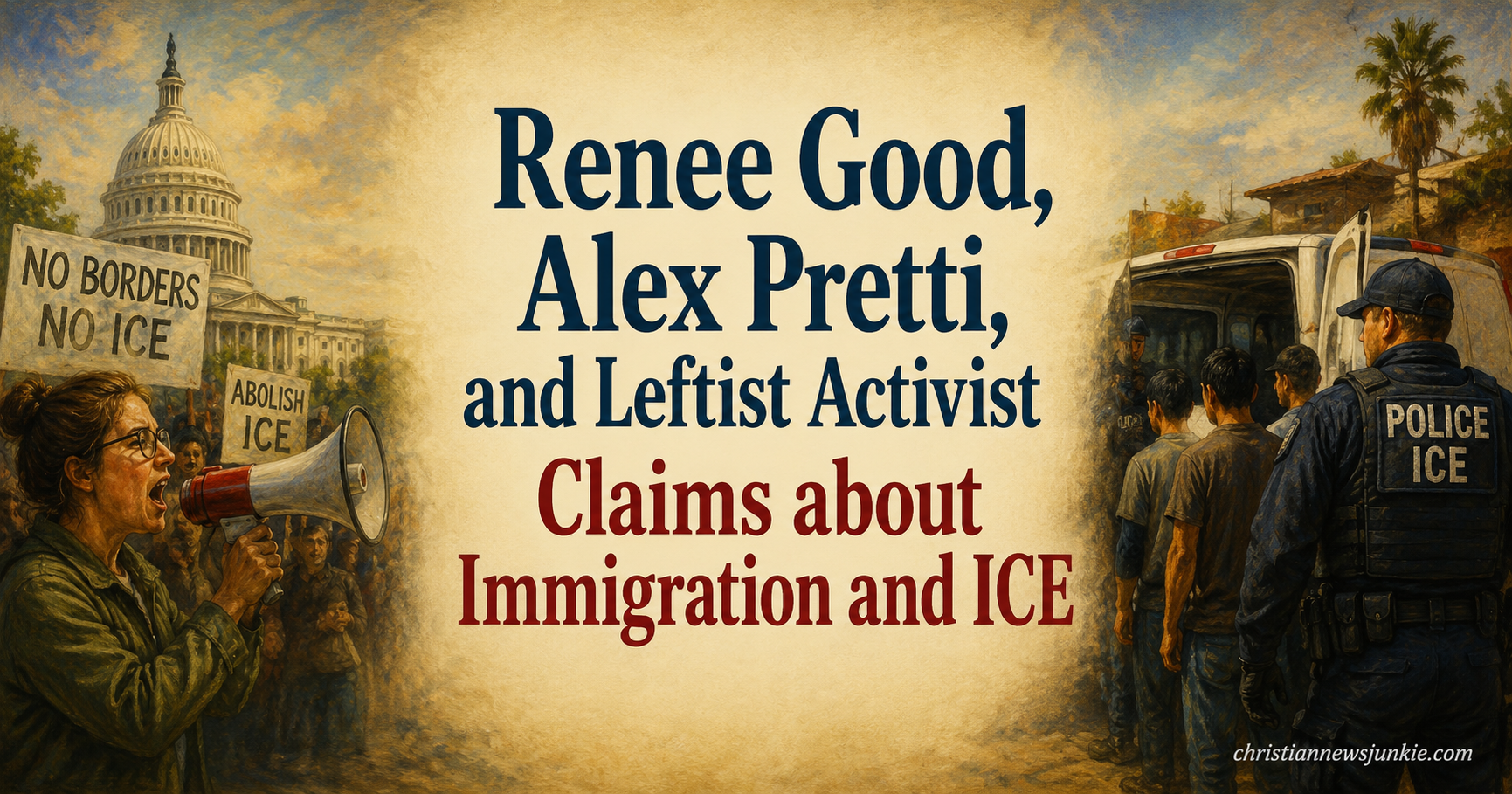
America’s immigration debate is no longer merely a disagreement about policy. It has become a conflict between competing visions of law, national sovereignty, public safety, and the responsibilities of government. In recent years, immigration enforcement agencies such as Immigration and Customs Enforcement (ICE) have become targets of intense criticism from progressive activists, while conservatives have increasingly defended ICE as an essential institution for maintaining the rule of law.
Many conservatives believe the current immigration crisis did not arise by accident. They point to policies adopted during the Biden administration that reduced enforcement, expanded parole programs, weakened deterrence, and encouraged unprecedented levels of illegal migration. Combined with sanctuary policies in many state and local jurisdictions, these changes produced a situation in which millions entered the country unlawfully while enforcement mechanisms were weakened or discouraged.
Conservative concerns about illegal immigration are frequently portrayed as racial by the political left.
Yet many conservatives reject that characterization.
They point to legitimate concerns involving national sovereignty, cartel activity, human trafficking, child exploitation, public safety, housing affordability, wage competition, taxpayer burdens, increased crime, welfare fraud associated with particular immigrant communities, cultural dilution related to incompatible ideologies, burdens on infrastructure like healthcare and welfare systems, and the long-term political consequences of mass illegal immigration such as increased representation in the government of the nation that primarily advantages the Democrat party.
Many conservatives also argue that woke rhetoric coming from segments of the political left expresses hostility toward traditional American culture, Western civilization, or white Americans. Whether one agrees with that assessment or not, it helps explain why immigration has become a cultural as well as political issue.
For Christians, the discussion begins with a recognition that government possesses legitimate authority. Romans 13 teaches that civil government is ordained by God to maintain order and punish wrongdoing. A nation that cannot control its borders ultimately loses the ability to enforce its laws.
Why Many Conservatives Oppose Mass Illegal Immigration
Critics on the political left frequently portray conservative concerns about illegal immigration as primarily motivated by racial or ethnic hostility. Most conservatives reject that characterization and instead point to a wide range of policy, economic, cultural, humanitarian, and constitutional concerns. Whether one agrees with these concerns or not, understanding them is essential to understanding the immigration debate.
National Sovereignty and Self-Government
At the most fundamental level, conservatives view immigration as a question of national sovereignty.
A sovereign nation possesses the authority to determine who may enter its territory, under what conditions they may remain, and how citizenship is obtained. Without effective border enforcement, conservatives argue that a nation gradually loses practical control over these decisions.
The issue is not merely about geography. It is about self-government. If immigration laws are routinely ignored or unenforced, the ability of citizens to determine national policy through democratic institutions is weakened. Conservatives therefore view border enforcement as an essential component of maintaining national independence and constitutional government.
Cartel Activity and Organized Crime
Many conservatives point to the role of transnational criminal organizations in facilitating illegal immigration.
Mexican drug cartels and other criminal enterprises have increasingly diversified beyond narcotics trafficking into human smuggling, extortion, kidnapping, and money laundering. These organizations often control major migration routes and profit from transporting migrants across international borders.
Critics of weak border enforcement argue that large-scale illegal immigration creates additional opportunities for cartels to expand their influence and revenue streams. In this view, immigration policy is not merely a humanitarian issue but also a national-security concern involving sophisticated criminal networks.
Human Trafficking
Human trafficking represents one of the most serious concerns associated with unlawful migration.
Traffickers often exploit vulnerable migrants who are desperate for economic opportunity or safety. Victims may be subjected to forced labor, debt bondage, coercion, physical abuse, or sexual exploitation.
Conservatives frequently argue that porous borders and weak enforcement create conditions that make trafficking operations more profitable and difficult to disrupt. They contend that stronger border security can reduce opportunities for traffickers to exploit vulnerable individuals.
Child Exploitation
Particular concern has been expressed regarding unaccompanied minors and children separated from family members during migration.
Reports from government agencies, journalists, and watchdog organizations have documented instances in which migrant children were released to sponsors who later subjected them to labor exploitation, neglect, or abuse. Some children have effectively disappeared from government monitoring systems.
For many conservatives, these cases demonstrate that compassion requires more than allowing entry into the country. It also requires preventing criminal networks from exploiting vulnerable children in the first place.
Public Safety
Public safety concerns extend beyond questions of immigration status itself.
Most illegal immigrants are not violent criminals. Nevertheless, conservatives argue that governments have a duty to identify and remove individuals who commit crimes and to maintain accurate records regarding who is present within the country.
They further argue that large-scale unlawful migration can complicate law-enforcement efforts, particularly when individuals enter without proper screening or identification. In their view, effective immigration enforcement is one component of a broader public-safety strategy.
Housing Affordability
Housing affordability has become a growing concern throughout many parts of the United States.
Conservatives often argue that rapid population growth resulting from large-scale immigration increases demand for housing faster than new housing can be built. Increased demand can contribute to higher rents, higher home prices, and greater competition for limited housing inventory.
While immigration is only one factor affecting housing costs, conservatives contend that immigration policy cannot be separated from discussions about affordability and housing availability.
Wage Competition and Labor Markets
Another common concern involves labor-market competition.
Conservatives frequently argue that large numbers of low-skilled workers entering the labor force can place downward pressure on wages, particularly for working-class Americans, legal immigrants, and minorities competing for entry-level employment.
Although economists continue to debate the magnitude of these effects, many conservatives believe that uncontrolled immigration disproportionately harms citizens who possess the fewest economic advantages.
Taxpayer Burdens
Illegal immigration can generate substantial costs for taxpayers at the federal, state, and local levels.
Public expenditures associated with education, healthcare, law enforcement, emergency services, translation services, welfare programs, and administrative processing can be significant. Conservatives argue that citizens are often required to absorb these costs through higher taxes or reduced public services.
Supporters of expanded immigration frequently point to economic contributions made by immigrants. Conservatives respond that those benefits must be weighed against the public costs associated with unlawful migration.
Crime Concerns
Discussions of immigration and crime often generate controversy.
Conservatives generally acknowledge that most illegal immigrants are not violent criminals. However, they argue that every sovereign nation has a legitimate interest in preventing individuals with criminal histories from entering or remaining within its borders.
They also point to highly publicized crimes committed by illegal aliens that might have been prevented through stronger enforcement. Their argument is often less about crime rates in general and more about preventable crimes resulting from failures of immigration enforcement.
Welfare Fraud and Abuse
Some conservatives express concern regarding fraud and abuse within public-assistance systems.
These concerns typically involve allegations that certain individuals exploit loopholes, use fraudulent documentation, or improperly access benefits intended for citizens and lawful residents. Such concerns are often directed toward specific cases and patterns rather than immigrants as a whole.
Conservatives argue that public confidence in social programs depends upon ensuring that benefits are administered lawfully and responsibly.
Cultural Cohesion and Incompatible Ideologies
Immigration involves more than economics and law enforcement. It also affects culture.
Historically, immigrants have often adopted American civic values, constitutional principles, and cultural norms while contributing positively to national life. Conservatives generally celebrate this tradition of assimilation.
However, some conservatives worry that large-scale immigration from regions characterized by political, religious, or ideological traditions hostile to Western concepts of liberty, constitutional government, religious freedom, or equality before the law may create long-term cultural tensions. Their concern is not primarily about ethnicity but about whether newcomers embrace the foundational principles upon which American society is built.
Strain on Healthcare and Social Services
Rapid population growth can place significant demands on public infrastructure.
Hospitals, schools, emergency services, transportation systems, and welfare programs may face increased pressure when local communities experience large influxes of migrants in short periods of time. Rural communities and smaller cities often possess limited capacity to absorb sudden population increases.
Conservatives therefore argue that immigration policy should take into account the practical ability of institutions to serve both existing residents and newcomers effectively.
Political Representation and Long-Term Electoral Consequences
Some conservatives express concern regarding the political implications of mass illegal immigration.
Under current census practices, representation in the House of Representatives is based largely upon total population rather than citizenship status alone. As populations increase in particular states, those states may gain additional congressional seats and electoral votes.
Conservatives argue that this system can create incentives that reward jurisdictions benefiting from large numbers of illegal immigrants. They further contend that because many immigrants and their descendants have historically favored Democratic candidates, large-scale illegal immigration may gradually alter the nation’s political balance. Critics dispute these conclusions, but concerns regarding representation and electoral influence remain an important component of the broader conservative argument.
What ICE Is and Why It Exists
Much of the criticism directed toward ICE begins with misunderstandings about its purpose.
ICE is not merely a deportation agency. It investigates human trafficking networks, drug trafficking organizations, child exploitation crimes, document fraud, financial crimes, gang activity, and numerous other offenses connected to transnational criminal organizations.
ICE’s responsibilities extend far beyond deportation.
The agency plays a significant role in dismantling criminal enterprises that operate across international borders. It also performs one of the most basic functions of any sovereign nation: enforcing immigration law.
Every nation determines who may lawfully enter and remain within its borders. Without enforcement, immigration laws become largely symbolic. Conservatives generally argue that immigration policy is meaningless if there is no practical mechanism for enforcing it.
The Left’s Narrative Against ICE
Many progressive activists portray ICE as fundamentally illegitimate. Common accusations include claims that ICE is “kidnapping” people, operating “concentration camps,” violating constitutional rights, or functioning as a racist institution.
The power of language matters.
Terms such as “kidnapping,” “concentration camp,” and “fascism” are emotionally charged. Conservatives argue that such language is designed to create moral outrage before the facts are examined.
The reality is that ICE operates pursuant to laws enacted by Congress and interpreted through the federal court system. One may disagree with those laws, but disagreement alone does not transform lawful enforcement into criminal conduct.
Likewise, comparisons between immigration detention facilities and historical concentration camps are viewed by conservatives as historically inaccurate and inflammatory. While detention facilities can and should be scrutinized for deficiencies, they are not equivalent to the extermination systems operated by totalitarian regimes.
Rights, Due Process, and Common Misconceptions
Illegal aliens possess legal protections under American law. They are entitled to due process as defined by statute and constitutional doctrine. They may challenge removal proceedings and seek legal representation.
Rights do not equal immunity.
One of the most common misconceptions is that possessing due-process rights creates a right to remain in the United States indefinitely. Conservatives generally reject that conclusion.
Another common claim is that ICE must possess a judicial warrant before apprehending every illegal alien. This argument confuses criminal law with immigration law. Immigration enforcement operates primarily through an administrative legal system that differs significantly from ordinary criminal proceedings.
The distinction may be complicated, but it is important. Immigration law contains enforcement mechanisms that differ from criminal law, and many activists fail to acknowledge those differences when criticizing ICE operations.
Activist Resistance and the Escalation of Risk
Opposition to immigration enforcement increasingly extends beyond political disagreement and into direct interference.
Reports from numerous jurisdictions describe protesters blocking vehicles, surrounding officers, throwing objects, directing lasers into officers’ eyes, using noisemakers to disrupt communications, and physically interfering with operations.
Conservatives argue that such tactics increase the likelihood of tragedy.
Chaos increases risk.
Law-enforcement officers operating in a volatile environment must make rapid decisions under pressure. Protesters, suspects, officers, and bystanders all face increased danger when enforcement actions become surrounded by confusion and hostility.
Even those who oppose immigration enforcement should recognize that creating a chaotic environment does not make encounters safer. It makes them less predictable and potentially more dangerous for everyone involved.
Why Some ICE Agents Wear Masks
A frequent criticism concerns ICE agents who wear masks during operations.
Progressive critics argue that masks reduce transparency and accountability. Conservatives respond that the issue is more complicated.
The concern is doxing.
Doxing refers to the publication of personal information such as home addresses, phone numbers, family information, employer information, and other identifying details with the intent of exposing individuals to harassment, intimidation, or threats.
Many federal officers believe masking helps protect themselves and their families from harassment campaigns and potential retaliation. In an era of social media, personal information can spread rapidly and expose family members who have no connection to law-enforcement activities.
Whether one agrees with masking or not, conservatives argue that concerns about officer safety deserve serious consideration.
Renee Good, Alex Pretti, and Competing Interpretations of Tragedy
The deaths of Renee Good and Alex Pretti have become symbols within the broader immigration debate.
The facts surrounding these incidents remain disputed in important respects.
Reports indicate that Alex Pretti was involved in confrontations with federal officers and was observed carrying a handgun. Reports also suggest he was accused of damaging federal vehicles. At the same time, critics of ICE dispute aspects of the government’s characterization of his conduct.
Likewise, competing interpretations exist regarding Renee Good’s use of her vehicle during her encounter with ICE officers. Government officials and critics have offered significantly different accounts of what occurred.
The existence of factual disputes should be acknowledged.
Conservatives, however, generally argue that the actions of both individuals contributed substantially to the circumstances that led to the fatal encounters.
The conservative argument is not that these deaths should be celebrated. Rather, it is that actions have consequences. When individuals resist law enforcement, create dangerous conditions, or participate in highly volatile confrontations, the risk of tragedy increases dramatically.
Critics of ICE reject this interpretation and place primary responsibility on law-enforcement officers. The disagreement ultimately reflects different understandings of responsibility, risk, and accountability.
Resistance by Public Officials and the Rule of Law
Opposition to immigration enforcement is not limited to activists.
Sanctuary policies, non-cooperation directives, and resistance by public officials have become common in many progressive jurisdictions.
Conservatives frequently point to cases involving public officials accused of helping illegal aliens avoid apprehension. They argue that such actions undermine the rule of law by allowing personal political preferences to override legal obligations.
No official should be above the law.
Many conservatives view resistance by judges, local officials, and government employees as especially troubling because those individuals have sworn to uphold the law rather than selectively enforce it.
The Humanitarian Case for Border Security
Supporters of strict immigration enforcement are frequently accused of lacking compassion or empathy.
Conservatives frequently respond by arguing that border security itself is a humanitarian policy.
Human trafficking organizations profit enormously from illegal migration. Migrants are frequently subjected to violence, extortion, sexual assault, exploitation, and dangerous travel conditions.
Weak enforcement benefits criminal organizations.
Cartels profit from moving people across borders. The more difficult illegal migration becomes, the more difficult it becomes for criminal organizations to exploit vulnerable individuals.
Many conservatives therefore view strong border enforcement as a means of protecting migrants rather than merely excluding them.
A Biblical and Theological Framework
Scripture presents a balanced view of government, justice, and compassion.
Romans 13 affirms the legitimacy of civil authority. Acts 17 recognizes the existence of nations and boundaries. At the same time, both the Old and New Testaments command believers to treat foreigners with justice and dignity.
Compassion and order are not enemies.
Christians are called to love their neighbors, but Scripture does not teach that governments must abandon lawful authority in order to demonstrate compassion.
Many conservative Christian thinkers, including R.C. Sproul, John MacArthur, Alistair Begg, and Francis Schaeffer, have emphasized the importance of maintaining both truth and compassion in public life.
Responding to Progressive Objections
Progressives argue that Jesus was a refugee, that borders are unchristian, that ICE officers resemble historical tyrants, and that immigration enforcement is inherently racist.
Conservatives generally reject those conclusions.
They argue that national borders are not condemned by Scripture, that lawful authority remains legitimate, and that immigration laws apply based on legal status rather than ethnicity.
Another common claim is that President Trump promised to deport only violent criminals. Conservatives respond that Trump’s stated position was to prioritize dangerous criminals first, not to exempt all other illegal aliens from enforcement.
Prioritization is not exclusivity.
Focusing first on the most dangerous offenders does not mean all other immigration laws cease to exist.
Conclusion: Compassion Without Anarchy
The debate over immigration is ultimately a debate about law, justice, sovereignty, and human dignity.
Conservatives generally support ICE because they believe immigration laws matter, borders matter, and civil government possesses a legitimate responsibility to enforce the law.
At the same time, Christians should reject cruelty, hatred, and dehumanization. Every person, regardless of legal status, bears the image of God.
A nation can enforce its borders while treating immigrants with dignity. It can protect citizens while showing compassion. It can uphold the rule of law without abandoning mercy.
The choice is not between compassion and enforcement. The challenge is to pursue both at the same time. For many conservatives, that balance remains the proper Christian response to the immigration debate.
S.D.G.,
Robert Sparkman
rob@christiannewsjunkie.com
RELATED CONTENT
Concerning the Related Content section, I encourage everyone to evaluate the content carefully.
If I have listed the content, I think it is worthwhile viewing to educate yourself on the topic, but it may contain coarse language or some opinions I don’t agree with.
Feel free to offer your comments below. Respectful comments without expletives and personal attacks will be posted and I will respond to them.
Comments are closed after sixty days due to spamming issues from internet bots.
You can always send me an email at rob@christiannewsjunkie.com if you want to comment on something afterwards, though.
It should be noted that on some matters, I am expressing my convictions or opinions on the matter. My convictions and opinions are strongly influenced by a conservative, Christian (biblical) worldview.
At times, like any other human being, my remarks will reflect my own intuition and bias. I am subject to error, although I speak from a clean concience, knowing that I will ultimately be held accountable for my words.
If you have evidence that I am wrong about a material statement of fact, provide the evidence and I will gladly review it and make revisions if merited. Obviously, there are some assertions that are matters of opinion that I will not change, but I always strive to be truthful.
I will continue to add videos and other items to the Related Content section as opportunities present themselves.
I recommend these Youtube channels and commentators for good content on politics and news from a Christian and/or conservative worldview: Albert Mohler, Allie Beth Stuckey, Bill O’Reilly, CBN News, Hugh Hewitt, John Anderson Media (Australia), Nick Freitas, Ruthless Podcast (language warning), Scott Jennings, The Hot Zone with Chuck Holton, Vince Dao, and Verdict with Ted Cruz.
Albert Mohler’s channel on Youtube has a daily episode called The Briefing with Albert Mohler that I highly recommend. Allie Beth Stuckey’s channel is top-notch, too.
For livestreaming of political protests and riots by conservative commentators, check out Nate Friedman, Cam Higby, James Klug, and Nick Shirley. I don’t agree with the perspectives of all these commentators and the language of protesters is often obscene. Most news outlets will not cover these illegal assemblies, though, because it doesn’t promote their narrative.
Depictions of Jesus Christ are used in some illustrations. I realize that some including conservative Presbyterians consider this to be idolatry. I respectfully disagree with their position on this matter as the commandment forbids worshiping such depictions, and I do not worship these illustrations.